26.01.2026Awards
€50 million to industrialise quantum photonics
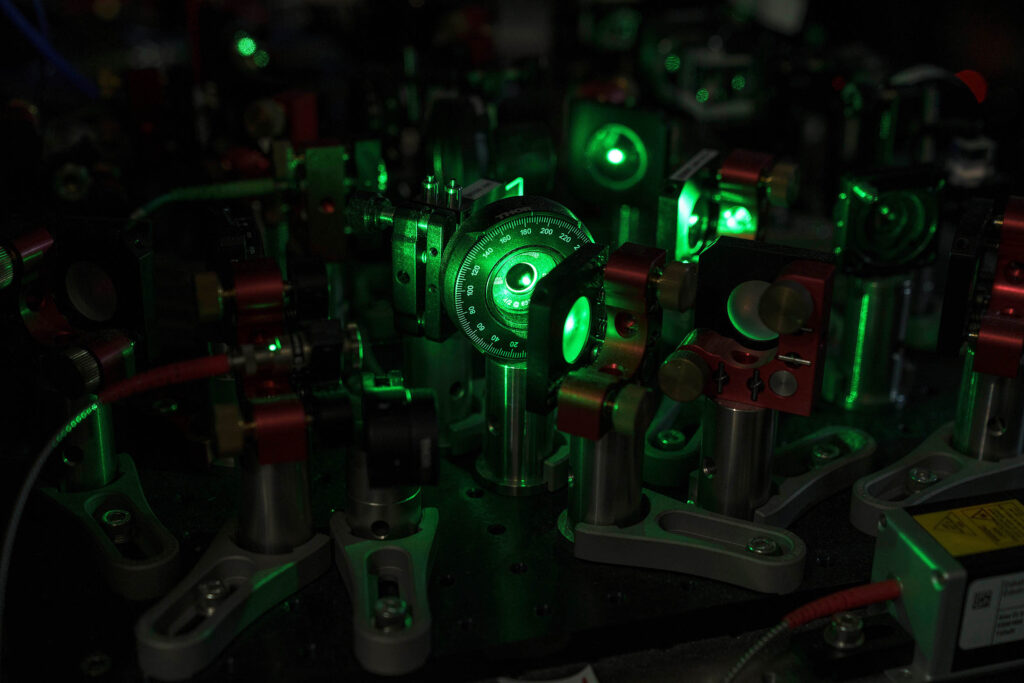

Quantum photonic components that perform well in a lab do not always translate into reliable modules for larger systems or real-life applications. A new European pilot will tackle those challenges: Photonics for Quantum (P4Q). The consortium focuses on aligning design, fabrication, packaging, and testing so that chips work consistently across production runs and can be integrated into demonstrators.
From components to systems: computing, networking, and sensing
Reliable quantum photonic chips matter for multiple applications. In quantum communication, photonics underpins the distribution of quantum states through optical fibers for secure communications and to interconnect remote quantum processors. While in quantum computing, photonics could play a role in control, readout, interconnects, and modular architectures.
P4Q’s technical focus includes reduced optical loss in chips and fibers, photonic components that operate at cryogenic temperatures, and circuits that can be assembled into larger subsystems. A major deliverable is the development of Process Design Kits (PDKs) and Assembly Design Kits (ADKs), which standardise design rules and packaging interfaces so that chip design and assembly match the realities of fabrication and system integration.
This connects to Carlos Errando-Herranz’s work on extending standard foundry silicon photonics with PDK-compatible quantum functionality. The work of Carlos’ group in P4Q will focus on the integration of color center qubits into complex photonic circuits in collaboration with foundries, and the design and characterization of such functional quantum circuits. That “foundry-first” approach is the same logic behind P4Q’s PDK and ADK work: it reduces iteration time and supports reproducible packaging and qualification when moving from single chips to integrated subsystems. The Errando-Herranz lab will receive 2 million euros in funding to contribute to the consortium.
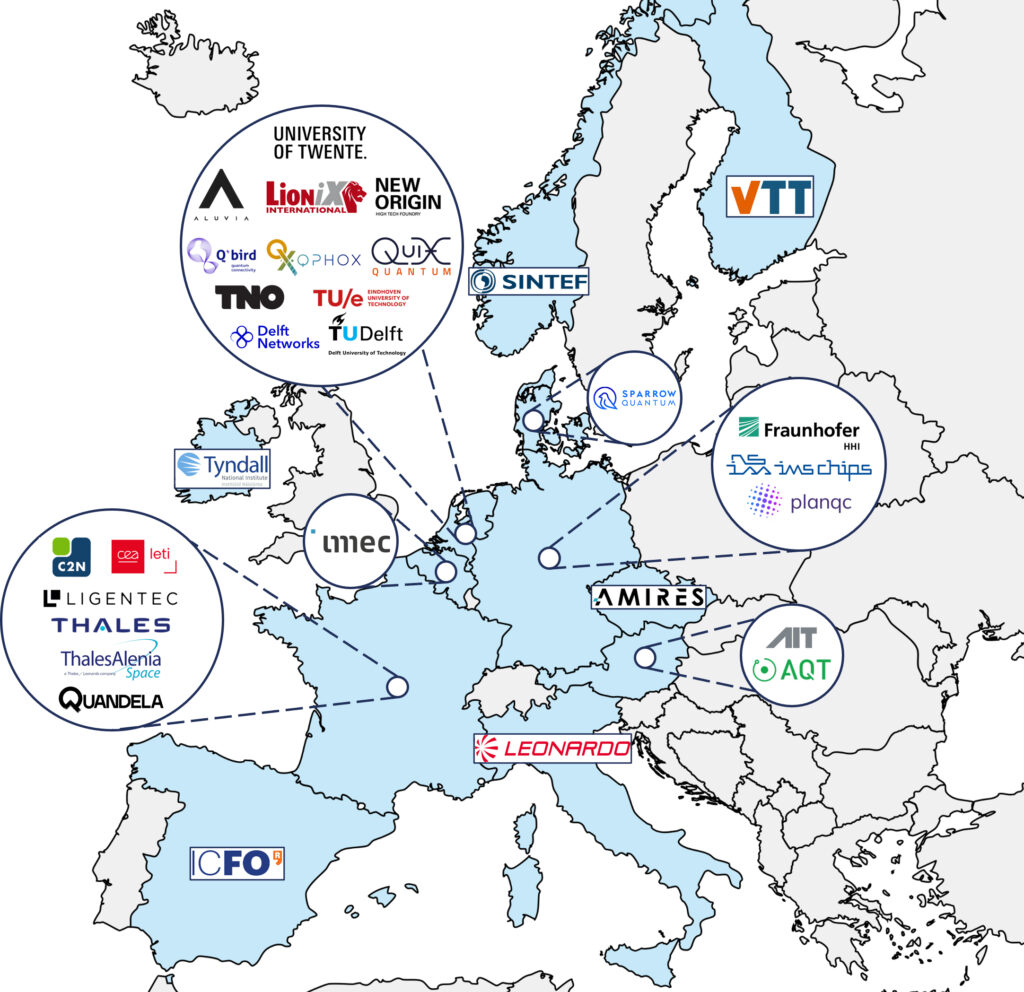
A map of all P4Q partners
Linking the Delft ecosystem, including Delft Networks
P4Q’s focus on repeatable fabrication and assembly also supports the wider quantum ecosystem around Delft. Delft Networks, a QuTech spin-out founded in 2024 that is developing quantum network systems aimed at long-range entanglement connections, will closely collaborate with the Errando-Herranz lab and foundries on requirements and design, as well as perform system tests of the integrated chips. For companies such as Delft Networks, manufacturable photonic components, packaging flows, and qualification practices enable moving from lab demonstrations to system-level deployments.
P4Q is supported by Oost NL and financially enabled by Quantum Delta NL, Nanolab NL, and the Ministry of Economic Affairs.