09.09.2026Quantum Internet
Diamond spin quantum computing takes a step toward optical scaling
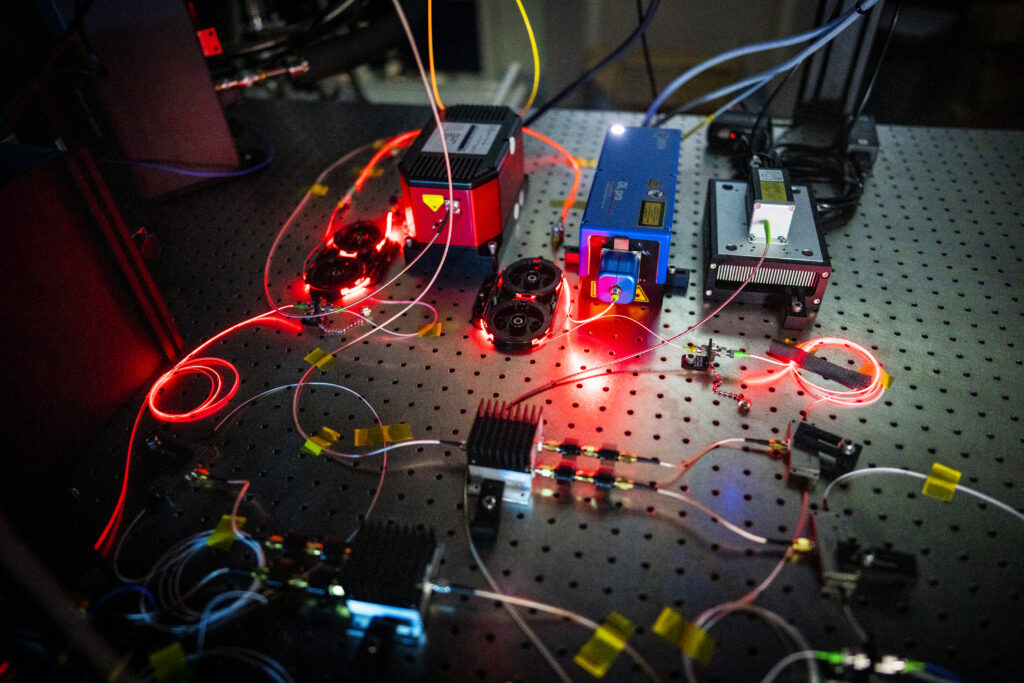

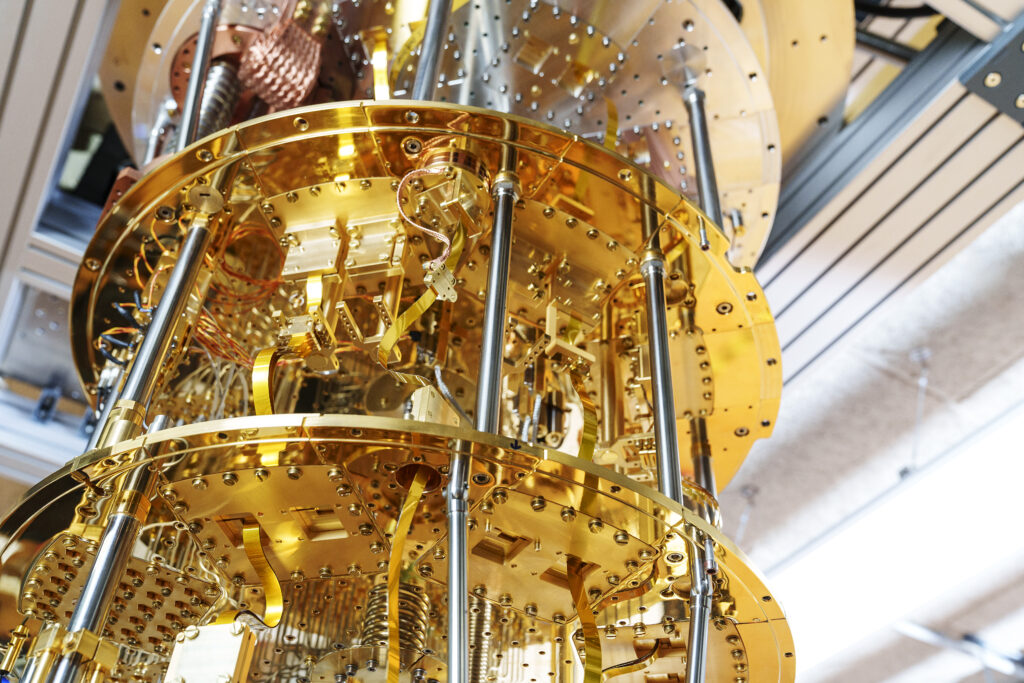
Researchers from Fujitsu, TU Delft, and QuTech have developed a prototype for a new type of quantum computer based on tin-vacancy (SnV) centres in diamond. The system, developed under a collaboration that began in 2020, combines diamond spin qubits with integrated photonics on a chip. It represents an early, system-level step toward a modular quantum computer in which separate quantum processors are connected using light.
Rather than demonstrating a large-scale quantum processor, the prototype addresses a key challenge for future quantum computers: how different components can be integrated in an architecture that can grow beyond a single chip. While several hardware platforms are currently being explored for quantum computing—including superconducting circuits, trapped ions, neutral atoms and semiconductor spins—diamond spin qubits offer a complementary approach. Their ability to interface with light makes them a strong candidate for modular, optically connected architectures.
The current prototype contains a single diamond-based quantum module that integrates spin qubits with on-chip photonic components. It operates at the relatively warm temperature of approximately 1.55 kelvin (−271.6 °C). The prototype is set to be accessible through Fujitsu’s Hybrid Quantum Computing Platform. By bringing together spin qubits, integrated photonics, chip fabrication, hardware control and platform access, it establishes a foundation for more advanced systems.
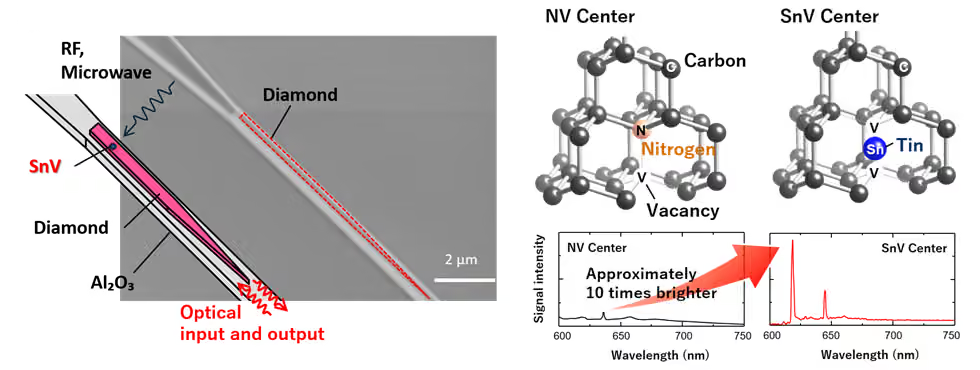
Left:. Electron microscope image and schematic diagram of a part of the photonics integrated circuit consisting of diamond containing SnV centers and alumina waveguides. Right: Molecular structures and emission spectra of SnV centers and NV centers.
Connecting quantum modules with light
Scaling a quantum computer is not simply a matter of placing more qubits on one chip. Future systems might need separate quantum modules that can exchange quantum information efficiently. Diamond spin qubits offer an interesting route for this, as electron spins associated with colour centres can interact with photons. This creates the possibility of connecting qubits across chips, or even between separate cryogenic systems, using optical links.
For this prototype, the researchers focused on SnV centres: atomic-scale defects in diamond with optical properties that make them promising interfaces between stationary spin qubits and travelling photons. The system combines a nanoscale piece of diamond containing a single SnV centre with an alumina optical waveguide. The waveguide guides photons emitted by the SnV centre and forms part of a photonic integrated circuit.
Bringing these elements together is an important engineering step towards an architecture in which multiple quantum modules could be linked.
From one module to many
The current prototype does not yet demonstrate optical connections between multiple quantum-computing modules. However, it validates the core technologies needed to work towards such a system.
The partners plan to continue developing the architecture, with the aim of building a system consisting of multiple quantum modules in 2027. Demonstrating that such systems can be scaled to useful numbers of high-quality qubits remains a substantial scientific and engineering challenge. This prototype represents an important first step in that direction.