07.07.2026Quantum Computing
Quantum Inspire adds new open-architecture quantum processor: Tuna-17

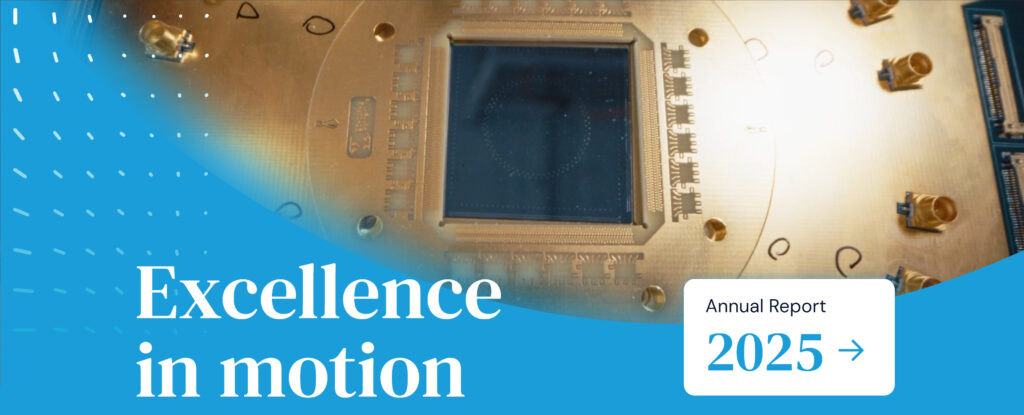
QuTech, in collaboration with the Delft quantum technology ecosystem, has released Tuna-17: a new open-architecture superconducting quantum computer designed to advance Europe’s publicly accessible quantum computing capabilities. Developed by QuTech at TU Delft, Tuna-17 is now available worldwide through the Quantum Inspire cloud platform, offering free and open access to real quantum hardware.
Building scalability, integration, and maturity
Tuna-17, developed by the DiCarlo Lab at QuTech, is an important milestone for European science—not only because building a superconducting quantum system of this complexity and performance is a major technical achievement, but also because it is openly accessible and free to use. Unlike many advanced quantum systems, Tuna-17 is available through a public cloud platform, allowing researchers, students and educators to work directly with real quantum hardware from anywhere in the world. Just as importantly, the system has been built by the Delft quantum community, demonstrating how Europe can develop advanced quantum technology in an open and collaborative way.
The architecture of the Tuna systems is designed with scalability in mind in all layers, and Tuna-17 – following the releases of Tuna-5 and Tuna-9 – is the third system released in a year. This demonstrates an increasingly rapid iteration cycle and proves the system’s scalability strengths. Naturally, the team is already working on the next processor: Tuna-28.
The new Tuna-17 computer is a clear example of full-stack integration across a 100% European value chain. QuTech’s open-architecture approach aims to move the technology towards interoperability between hardware and software layers, and away from closed, vertically integrated systems. To support a strong and growing future value chain, QuTech, in collaboration with European industrial partners, is establishing a dedicated unit in Delft focused on open-architecture system integration.
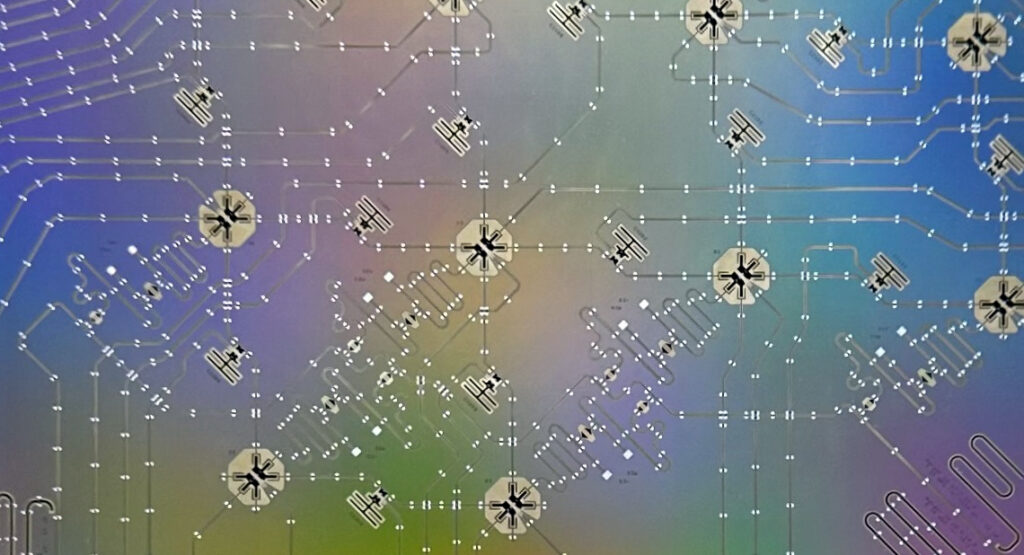
Most importantly, this iteration of the Tuna processor family – with 17 qubits and 24 tunable couplers – is a significant step enabling many quantum error correction experiments. Its universal gate set and mid-circuit measurements also support a wide range of advanced quantum algorithms, such as low-depth factorisation and near-term (NISQ) experiments.
Research leads to economic impact
Tuna-17 integrates contributions from across the Delft ecosystem. QuTech/TU Delft is responsible for the design of the QPU (Quantum Processing Unit), fabrication, cloud/SDK support (Qiskit, PennyLane), and system integration and maintenance. TNO provides the compilation layer and co-designs the QPU. Orange Quantum Systems supplies the Quantum OS and calibration software; Qblox supplies the control electronics; Delft Circuits supplies cryogenic cabling; and QuantWare supplies cryogenic packaging and amplifiers.
This collaboration reflects Delft’s commitment to open architecture, accelerating the transition from research prototypes to scalable, industry-ready systems. Tuna-17 was developed together with the HectoQubit consortium (QDNL Phase 2 CAT-1) and is a milestone within the EU Flagship OpenSuperQPlus Delft demonstrator, reinforcing Europe’s quantum supply chain and economic impact.
Open access = rapid innovation
Everyone can access Tuna-17 via Quantum Inspire, with no usage caps. To reduce statistical uncertainty, the platform allows over 100,000 so-called “shots” per job. Users also value its automatic self-calibration and continuous performance reporting. Quantum Inspire backends such as the Tuna systems are actively used in teaching at TU Delft – for example, in the Quantum Information Science & Technology Master’s programme – and elsewhere.
Providing free access to real hardware empowers not only researchers, enthusiasts and students to explore quantum algorithms, but also helps to build the skilled quantum workforce essential for the future.
In simpler terms, Tuna-17 makes high-end quantum computing available beyond the small group of specialists who build such machines. It gives the wider community free access to a powerful quantum system, helping researchers test new ideas, students learn on real hardware, and universities contribute to the next steps in quantum computing. This combination of scientific ambition, open access and community-built technology makes Tuna-17 a meaningful step forward for Europe.
Reference
“Optimizing the Frequency Positioning of Tunable Couplers in a Circuit QED Processor to Mitigate Spectator Effects on Quantum Operations“, PHYSICAL REVIEW LETTERS 136, 200801 (2026)